
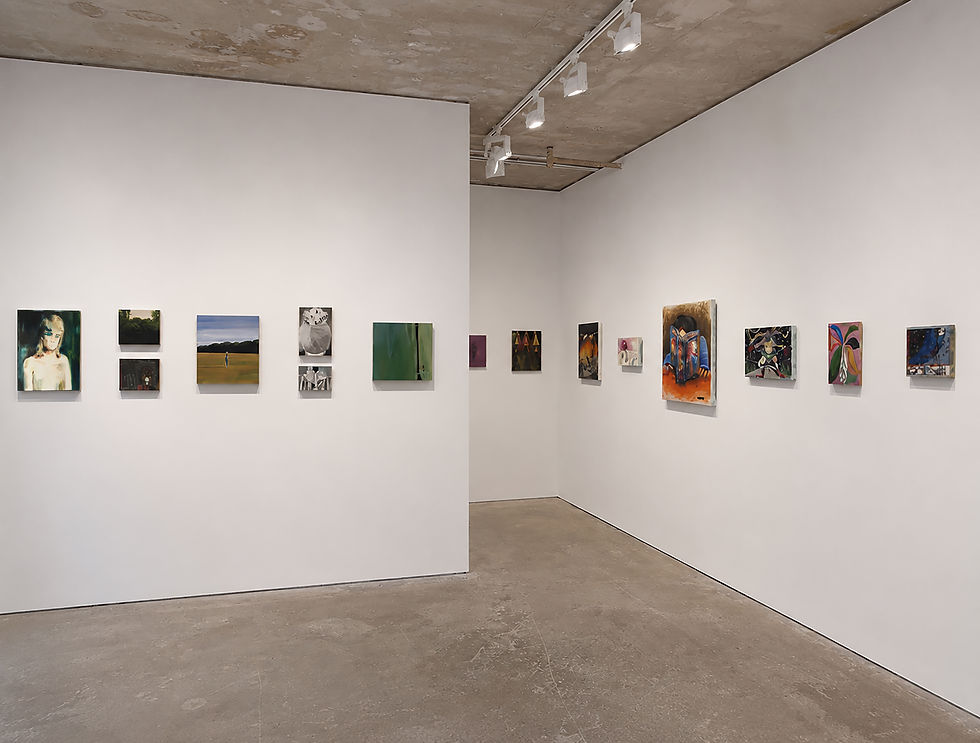
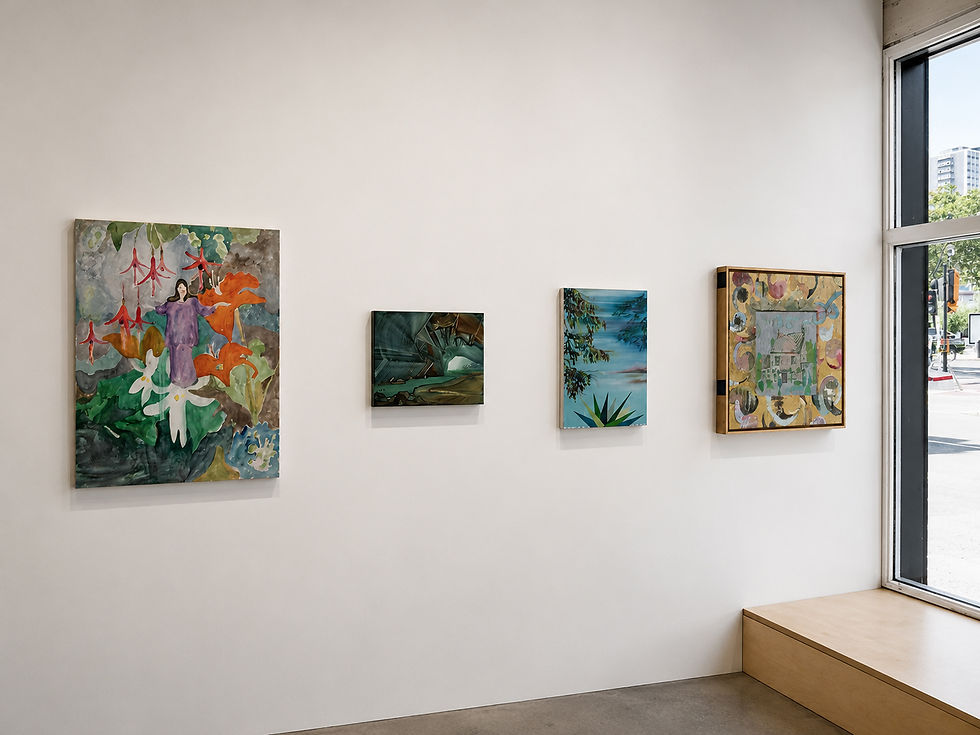
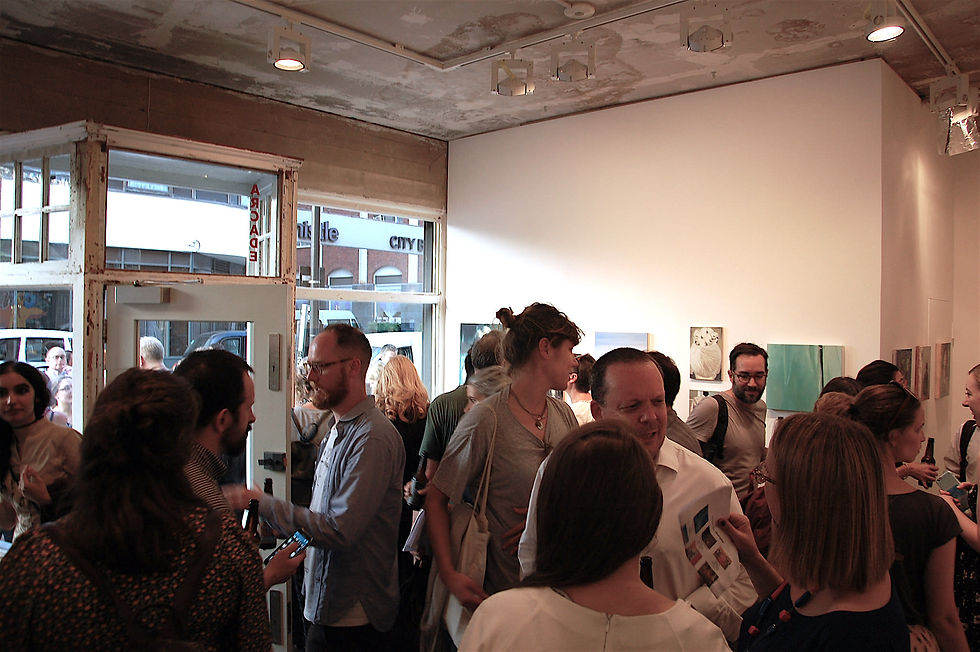
SAMPLER
Arcade Fine Arts, London
August 2016
Sampler was the first exhibition I organised after leaving a commercial gallery on Cork Street, where I had worked for thirteen years. By the time I left, I knew exactly what I didn't want to do, but I had very little idea what came next. I had become disconnected from the contemporary art that had first made me want to work in galleries, and I needed to learn how to look again.
For the next six months I walked across London almost every day, visiting commercial galleries, artist-run spaces and artists' studios. I had very little money, so walking was as much a financial necessity as it was a way of seeing. Those journeys reintroduced me to a generation of artists whose work I might never otherwise have encountered, and to conversations that reminded me why contemporary art had mattered to me in the first place.
Although my interests stretched across every discipline, painting became the medium through which I felt most comfortable working. After so many years in galleries, it was the language I knew best.
The artists in Sampler weren't brought together to illustrate a curatorial argument or define a movement. They were simply artists I'd met during those six months whose work had stayed with me. Practical considerations shaped the exhibition as much as any aesthetic decision. Each artist contributed a single work and, more often than not, that work was chosen because I could carry it across London myself. There was no budget for transport, storage or art handlers.
The title came from music. For several years I named each exhibition after a musical reference, and Sampler borrowed its name from the compilation records independent labels released to introduce listeners to their artists. The exhibition followed the same principle: twenty-seven painters, one work each, offered as an introduction rather than a survey.
By coincidence, the exhibition opened just as contemporary British painting was beginning to attract renewed attention. Sampler was sometimes folded into that wider conversation, although it had never been conceived as a statement about painting's resurgence. It was simply a reflection of where six months of looking had led me.
None of it would have happened without Chris Mooney, who generously offered me Arcade Fine Arts for a week in August 2016. During those months I had been sharing my gallery visits and studio conversations on social media, gradually building an audience without really intending to. The response to the exhibition exceeded anything I expected.
Looking back, Sampler isn't an exhibition I'd make again. It belongs to a particular moment, and to someone learning through making. What it did do was introduce me to gallery owners who began inviting me to curate exhibitions in their own spaces. Those invitations led first to projects across London and, eventually, around the country. I hadn't set out to become an independent curator—in fact, I wasn't even aware it was something people did. I simply knew what I didn't want to do anymore. The rest emerged, exhibition by exhibition.